
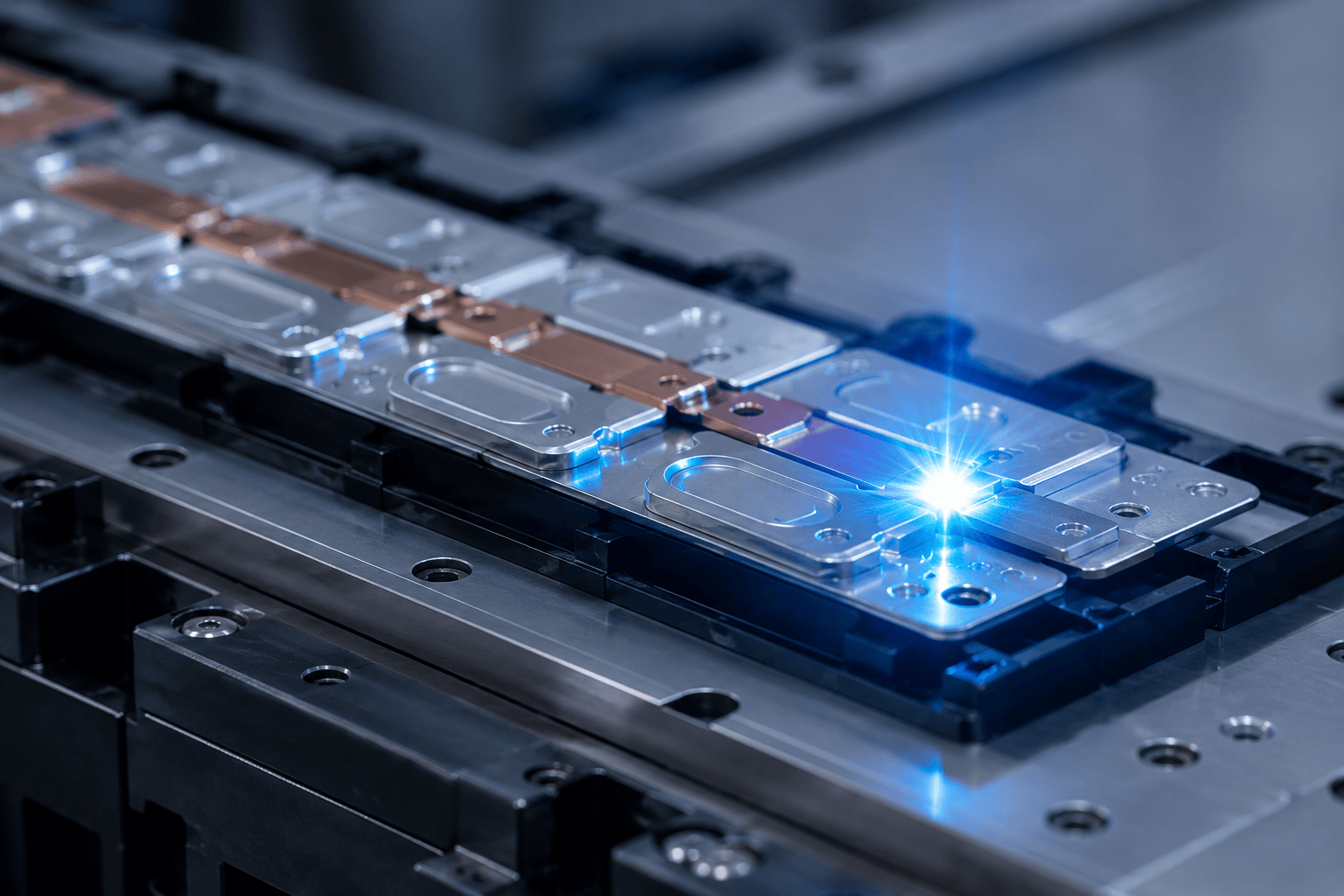
Laser Welding Applications: High-Speed and Precision Joining for Modern Manufacturing
Laser welding has become one of the most important joining technologies in advanced manufacturing. By utilizing a highly concentrated laser beam as the heat source, laser welding delivers deep penetration, high precision, minimal distortion, and exceptional weld quality.
Compared with traditional welding methods, laser welding offers faster processing speeds, superior automation capabilities, and improved consistency, making it an ideal solution for industries requiring high-quality and reliable joining processes.
What Is Laser Welding?
Laser welding is a non-contact joining process that uses a focused laser beam to melt and fuse materials together. The concentrated energy creates a narrow heat-affected zone (HAZ), resulting in strong welds with minimal thermal deformation.
Modern laser welding systems commonly utilize:
-
Fiber lasers
-
Blue lasers
-
Green lasers
-
Hybrid laser welding systems
Combined with high-speed galvo scanners, robotic systems, or motion platforms, laser welding can achieve both precision micro-welding and large-scale industrial production.
Advantages of Laser Welding
Laser welding offers numerous advantages over conventional welding technologies:
High Welding Speed
Laser welding can be several times faster than TIG or MIG welding, significantly improving production efficiency.
Minimal Heat Distortion
The highly focused laser beam minimizes thermal impact on surrounding materials.
Excellent Weld Quality
Produces narrow, clean, and aesthetically pleasing weld seams with minimal post-processing.
High Precision
Ideal for delicate components and applications requiring micron-level positioning accuracy.
Easy Automation
Can be integrated with robotic systems, vision systems, and automated production lines.
Low Material Consumption
Requires little or no filler material in many applications.
Automotive Industry Applications
The automotive industry is one of the largest adopters of laser welding technology.
Typical Applications
-
Battery tray welding
-
EV battery pack assembly
-
Motor components
-
Transmission parts
-
Body-in-white welding
-
Automotive sensors
Benefits
-
High production throughput
-
Consistent weld quality
-
Reduced manufacturing costs
-
Improved structural strength
As electric vehicle production continues to grow, laser welding has become essential for battery manufacturing and lightweight vehicle structures.
Battery Manufacturing Applications
The rapid expansion of electric vehicles and energy storage systems has created significant demand for precision laser welding.
Typical Applications
-
Battery tabs
-
Busbars
-
Battery cans
-
Battery modules
-
Battery pack assembly
Materials
-
Copper
-
Aluminum
-
Nickel
-
Stainless steel
Benefits
-
Low electrical resistance
-
High welding precision
-
Reduced spatter
-
Minimal thermal damage
Laser welding enables reliable electrical connections while protecting sensitive battery components.
Electronics Industry Applications
Miniaturization in electronics requires highly accurate joining processes.
Typical Applications
-
Sensor packaging
-
Connector welding
-
Electronic housings
-
Relay manufacturing
-
Micro-electronic assemblies
Benefits
-
Precision welding of small components
-
Minimal deformation
-
High repeatability
-
Excellent cosmetic appearance
Laser welding is particularly valuable for applications where traditional welding methods are too aggressive.
Medical Device Applications
Medical manufacturing demands clean, reliable, and traceable production processes.
Typical Applications
-
Surgical instruments
-
Medical implants
-
Catheter components
-
Stainless steel assemblies
-
Diagnostic equipment
Benefits
-
High-quality hermetic sealing
-
Smooth weld appearance
-
Minimal contamination risk
-
Suitable for precision medical products
Laser welding helps manufacturers meet stringent medical industry standards.
Aerospace Applications
Aerospace components require exceptional quality, strength, and reliability.
Typical Applications
-
Engine components
-
Turbine parts
-
Fuel systems
-
Sensor assemblies
-
Aerospace structural components
Benefits
-
High-strength welds
-
Reduced component weight
-
Excellent process control
-
Suitable for demanding environments
The precision and repeatability of laser welding make it ideal for critical aerospace applications.
Galvo Laser Welding Systems
Galvo scanner technology is increasingly used in modern laser welding systems.
By rapidly steering the laser beam across the workpiece, galvo welding systems provide:
Key Advantages
-
High-speed beam positioning
-
Flexible welding paths
-
Reduced cycle times
-
Enhanced automation
-
Improved production efficiency
Typical Applications
-
Battery tab welding
-
Busbar welding
-
Electronic component welding
-
Precision metal welding
-
Micro-welding applications
Compared with conventional motion systems, galvo welding significantly increases productivity while maintaining high weld quality.
Why Choose Galvo-Based Laser Welding?
Modern manufacturers are seeking faster and more flexible production solutions.
Galvo laser welding systems offer:
-
High-speed processing
-
Excellent weld consistency
-
Reduced equipment footprint
-
Lower maintenance requirements
-
Easy integration into automated lines
-
Support for Fiber, Blue, and Green laser sources
These advantages make galvo welding an attractive solution for next-generation manufacturing environments.
Conclusion
Laser welding has transformed modern manufacturing by delivering fast, precise, and reliable joining capabilities. From electric vehicle batteries and consumer electronics to medical devices and aerospace components, laser welding provides superior quality and production efficiency.
Combined with advanced galvo scanning technology, laser welding systems can further increase throughput, flexibility, and automation performance, helping manufacturers meet the growing demands of Industry 4.0.
Whether you are developing battery production lines, precision electronic assemblies, or high-value industrial products, laser welding offers a powerful solution for achieving consistent and high-quality results.