
Laser Cleaning Applications: Efficient and Eco-Friendly Surface Preparation Technology
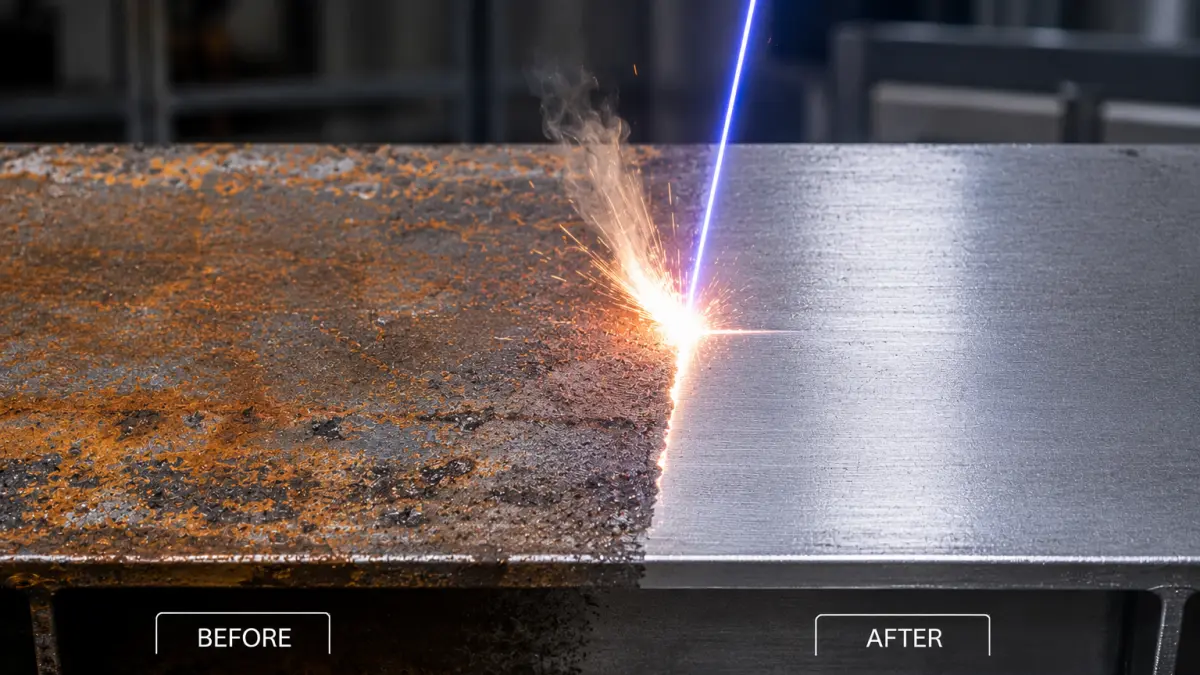
Laser cleaning is an advanced surface treatment technology that uses a high-energy laser beam to remove contaminants, coatings, rust, oxides, oil, and other unwanted materials from a substrate without damaging the underlying surface.
As industries continue to seek environmentally friendly, precise, and automated cleaning solutions, laser cleaning has become an increasingly popular alternative to traditional methods such as chemical cleaning, abrasive blasting, and mechanical grinding.
Combined with high-speed galvo scanning systems, modern laser cleaning equipment delivers exceptional cleaning efficiency, precision, and process control across a wide range of industrial applications.
What Is Laser Cleaning?
Laser cleaning is a non-contact process that utilizes laser energy to selectively remove surface contaminants.
When the laser beam interacts with rust, paint, oxide layers, or other contaminants, the unwanted material absorbs the laser energy and is rapidly vaporized or detached from the substrate surface.
The underlying material remains largely unaffected due to the precise control of laser parameters.
Typical laser cleaning systems include:
- Fiber laser source
- Galvo scan head
- F-Theta lens
- Control software
- Dust extraction system
The process can be fully automated and integrated into production lines for continuous industrial operation.
Advantages of Laser Cleaning
Non-Contact Process
No mechanical contact means:
- No tool wear
- No surface scratching
- No secondary damage
This is particularly important for precision parts and sensitive materials.
Environmentally Friendly
Unlike chemical cleaning methods, laser cleaning:
- Requires no solvents
- Produces minimal waste
- Reduces environmental impact
- Eliminates chemical disposal costs
It supports modern sustainable manufacturing initiatives.
High Precision
Laser cleaning can selectively remove contaminants while preserving the underlying substrate.
Applications include:
- Micro-cleaning
- Precision mold cleaning
- Electronics cleaning
- Medical device cleaning
Low Operating Cost
Compared with consumable-intensive processes such as sandblasting, laser cleaning offers:
- Lower maintenance costs
- No abrasive media consumption
- Reduced labor requirements
- Longer equipment life
Easy Automation
Laser cleaning systems can be integrated with:
- Robotic arms
- Conveyor systems
- Vision systems
- Automated production lines
This improves consistency and productivity.
Rust Removal Applications
Rust removal is one of the most common laser cleaning applications.
Typical Industries
- Shipbuilding
- Automotive
- Construction equipment
- Rail transportation
- Energy infrastructure
Advantages
- Removes rust efficiently
- Preserves base metal
- No abrasive damage
- Suitable for localized treatment
Laser cleaning is often used for both maintenance and manufacturing preparation processes.
Weld Preparation and Weld Cleaning
Laser cleaning plays an important role before and after welding.
Pre-Weld Cleaning
Removes:
- Oil
- Oxides
- Surface contamination
- Protective coatings
Benefits:
- Improved weld quality
- Reduced porosity
- Better process stability
Post-Weld Cleaning
Removes:
- Oxidation discoloration
- Weld residues
- Surface contaminants
This produces cleaner weld appearance and improved corrosion resistance.
Paint and Coating Removal
Laser cleaning provides precise removal of coatings without damaging the substrate.
Applications
- Automotive repair
- Aerospace maintenance
- Industrial equipment refurbishment
- Surface preparation before repainting
Benefits
- Selective coating removal
- Minimal substrate damage
- Reduced rework
- Excellent process control
Mold Cleaning Applications
Injection molds and industrial tooling require regular cleaning to maintain product quality.
Typical Applications
- Injection molds
- Tire molds
- Die casting molds
- Stamping tools
Advantages
- No mold disassembly required
- Reduced downtime
- Improved mold life
- Better production efficiency
Laser cleaning has become a preferred solution for high-value tooling maintenance.
Aerospace Applications
The aerospace industry requires highly controlled cleaning processes.
Typical Components
- Turbine blades
- Aircraft structures
- Engine components
- Composite materials
Benefits
- Precise cleaning control
- No abrasive damage
- Suitable for sensitive materials
- Supports strict quality standards
Battery Manufacturing Applications
As electric vehicle production grows, laser cleaning is increasingly used in battery manufacturing.
Typical Applications
- Battery tab cleaning
- Busbar preparation
- Electrode cleaning
- Surface activation before welding
Benefits
- Improved welding quality
- Better electrical conductivity
- Reduced contamination
- Increased production consistency
Laser cleaning is often integrated directly into battery production lines before laser welding processes.
The Role of Galvo Scan Heads in Laser Cleaning
Galvo scanning systems are critical components in modern laser cleaning equipment.
The scan head rapidly moves the laser beam across the workpiece surface, allowing:
- Uniform energy distribution
- Large-area cleaning
- High-speed processing
- Flexible cleaning patterns
Advantages of Galvo-Based Cleaning
- Faster cleaning speed
- Better surface consistency
- Adjustable cleaning area
- Reduced cycle time
- Easy automation integration
Advanced digital galvo systems significantly improve cleaning productivity and process quality.
Why Choose Galvo Laser Cleaning Systems?
Compared with traditional cleaning methods, galvo-based laser cleaning offers:
- Non-contact operation
- Environmentally friendly processing
- High precision
- Low maintenance requirements
- Excellent automation capability
- Suitable for large-scale industrial production
Whether cleaning rust, coatings, molds, or preparing surfaces for welding, galvo laser cleaning systems provide reliable and efficient performance.
Future Trends in Laser Cleaning
The laser cleaning market continues to grow with increasing adoption in:
- Electric vehicle manufacturing
- Aerospace maintenance
- Automated production lines
- Smart factories
- Green manufacturing initiatives
Future developments will focus on:
- Higher cleaning speeds
- AI-assisted process optimization
- Robotic integration
- Fully automated cleaning cells
Conclusion
Laser cleaning is transforming industrial surface treatment by providing a fast, precise, and environmentally friendly alternative to traditional cleaning methods. From rust removal and weld preparation to mold maintenance and battery manufacturing, laser cleaning offers significant advantages in quality, efficiency, and sustainability.
Powered by advanced fiber lasers and high-performance galvo scan heads, modern laser cleaning systems help manufacturers improve productivity while reducing environmental impact and operating costs.
As industries continue moving toward automation and green manufacturing, laser cleaning will remain a key technology for future industrial production.